
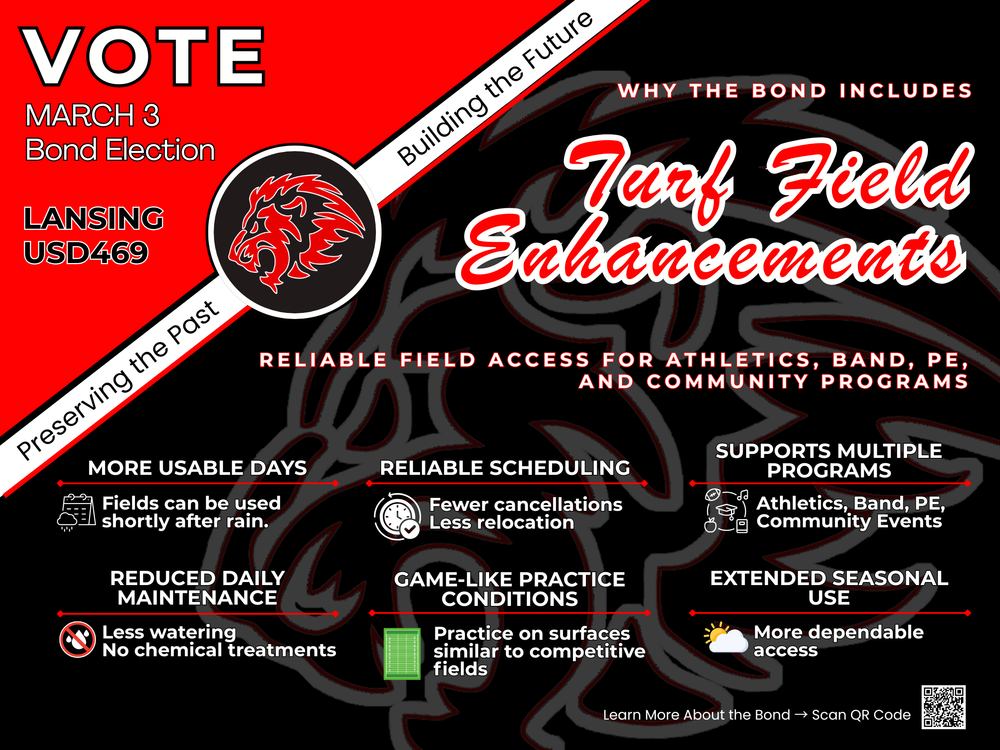
Lansing USD469 Bond Information Series: Turf & Activity Field Improvements

Overview

As part of the proposed March 3 bond election, Lansing USD 469 is providing factual information about the turf component, which appears as Question 2 on the ballot.


This section outlines how turf impacts student access, scheduling, safety, maintenance, and long-term facility use across multiple programs, including athletics, band, physical education, and community activities.


The turf question is separate from the base facilities package and would only move forward if Question 1 is approved.


Why Turf Is Being Considered

Turf is being considered to address long-standing challenges associated with natural grass fields, including:


  • Weather-related access limitations

  • Field recovery time after rain

  • High maintenance demands

  • Inconsistent playing surfaces

  • Scheduling conflicts between programs

Natural grass fields require drying time after rain and can become uneven or worn during heavy-use periods.

Turf provides a durable, consistent surface designed to support broader use while reducing downtime caused by weather and recovery cycles.


Access & Scheduling Across Programs

Natural grass fields are highly dependent on weather and field conditions. After rainfall, fields may require multiple days to recover before they can safely be used.


Turf fields:

  • Allow use shortly after rain stops (excluding lightning delays)

  • Reduce cancellations and relocations

  • Provide more predictable scheduling

  • Support multiple groups using the same space throughout the day

This increased access benefits:

  • Football, soccer, baseball, and softball programs

  • Marching band and performing arts

  • Physical education classes

  • Camps, clinics, and community activities


Practice & Preparation Time

Without turf, outdoor programs often require:

  • Multiple daily practice plans based on weather

  • Relocation to gyms or off-site facilities

  • Transporting equipment between locations

  • Reduced time for skill development

Turf fields:

  • Increase the number of usable practice days

  • Reduce logistical adjustments

  • Allow practices to take place on game-ready surfaces

  • Provide more consistent instructional time

Practice-to-Game Consistency

Many Lansing student-athletes practice primarily on natural grass but compete on turf surfaces at other schools. Turf fields typically play at a faster pace due to surface firmness and ball movement. When practice and competition surfaces differ, athletes may need to adjust during live competition rather than in practice.


Access to turf allows practice conditions to more closely mirror common competition environments, supporting preparation and reducing mid-game adjustments.


Safety & Playing Surface Consistency

Turf provides a uniform, stable surface across seasons and usage levels.

Benefits may include:

  • Reduced uneven or muddy conditions

  • Improved footing and visibility

  • Clear field markings for organized movement

  • More predictable surface conditions during high-use periods

Consistency becomes particularly important during peak seasons when natural grass fields are more susceptible to wear.


Maintenance, Staffing & Cost Considerations

Maintaining natural grass fields requires:

  • Regular watering

  • Fertilizers, herbicides, and pesticides

  • Annual surface material additions

  • Frequent grooming and repair

  • Significant staff time before and after use

Turf fields:

  • Reduce water usage

  • Eliminate chemical treatments

  • Require less daily preparation

  • Provide more predictable maintenance cycles

  • Reduce reliance on specialized maintenance equipment

These efficiencies help address staffing and resource limitations while maintaining usable facilities.


Weather Resilience & Seasonal Use

Kansas weather can significantly limit natural field access, especially during spring and early summer.


Turf fields:

  • Recover quickly after rain

  • Reduce delays and cancellations

  • Support extended seasons of use

  • Improve reliability for scheduled events

This resilience benefits athletics as well as:

  • Summer camps and clinics

  • Youth programming

  • Community events

Use Beyond Athletics

Athletic turf supports multiple district programs:


Band & Performing Arts

  • Consistent surface for marching drills and formations

  • Improved safety during extended rehearsals

  • Reduced cancellations due to wet field conditions 

Physical Education

  • Reliable outdoor instructional space

  • Fewer weather-related disruptions

Community & Rental Use

  • Potential to host tournaments and events

  • Reduced wear on other district facilities

  • Opportunities for community engagement=

Long-Term Perspective

While turf requires a higher upfront investment, it offers:

  • Increased access for students

  • Reduced weather-related disruptions

  • More predictable maintenance needs

  • Broader use across programs

  • Greater facility availability throughout the year

The turf component is structured as a separate bond question, allowing voters to consider it independently from the base facilities package.


Ballot Structure Reminder

Question 1: Base Facilities Package

Question 2: Turf Enhancements 

Question 2 would only move forward if Question 1 is approved.

Learn More