
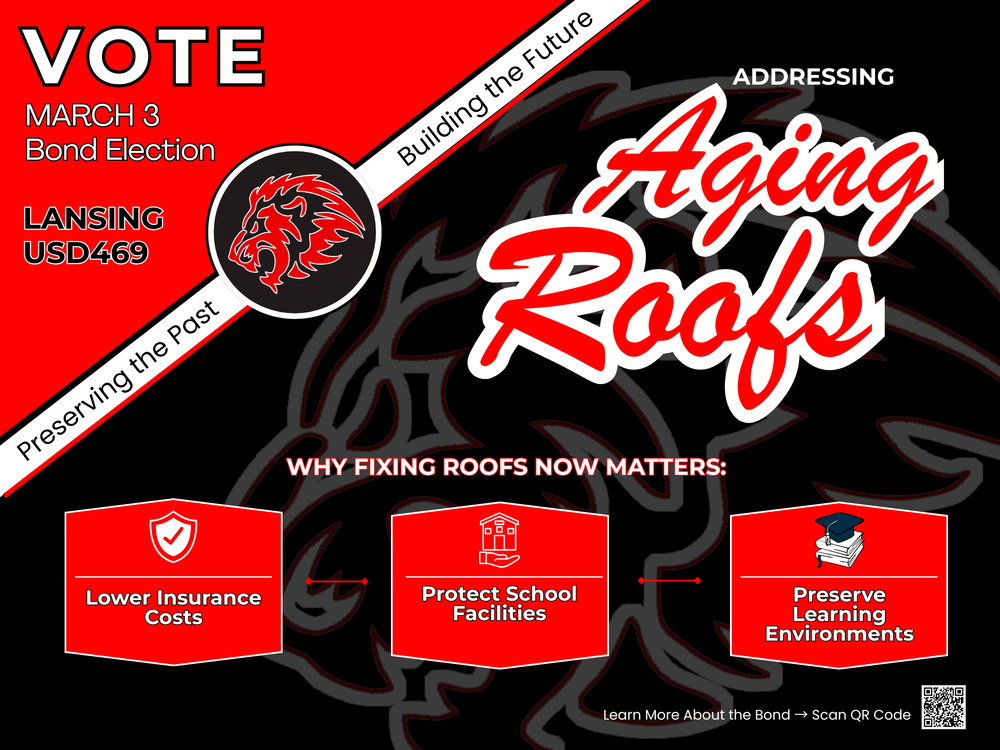
One of the most common questions Lansing USD 469 hears from the community is, “Why are roofs such a priority in this bond?”
The answer is simple but important: many district roofs have reached the end of their useful life, and continuing to patch them is no longer a safe or financially responsible option.
What the Facilities Assessment Shows
The district completed a comprehensive facilities assessment that evaluated all major building systems, including roofs. This assessment included:
Visual inspections and photographs
Infrared scans showing moisture trapped beneath roof membranes
Condition ratings for each building
Several roofs across the district show advanced deterioration. In these cases, patching one area often causes leaks to appear elsewhere. This cycle continues until a new roof surface is installed.
Why Roofs Are the First Priority
Roofs protect every other system in a building. When roofs fail:
HVAC and electrical systems are exposed to damage
Interior learning spaces are impacted
Emergency repairs increase
Costs compound over time
The estimated cost to address roof needs alone is approximately $6 million, even using extended-warranty overlays rather than full tear-offs. Annual operating budgets cannot absorb this level of expense without significant reductions elsewhere.
To put that into perspective, covering roof replacement through the operating budget would require cuts equivalent to dozens of teaching positions districtwide.
Insurance Costs and Financial Risk
Roof conditions also directly impact insurance coverage and cost.
Because of the condition of several district roofs:
The district’s insurance premiums increased by approximately $350,000 per year
Current deductibles are $150,000 per building, per roof
This means the district must maintain significant cash reserves to cover deductibles if a storm damages multiple buildings.
If a major wind or hailstorm were to impact several aging roofs at once, the district could face millions of dollars in out-of-pocket costs, placing immediate strain on the operating budget.
Improving roof conditions will:
Lower insurance premiums over time
Reduce deductibles
Attract more insurance carriers willing to insure the district
What Happens If Roofs Are Not Addressed Now
Deferred maintenance leads to:
Higher emergency repair expenses
Increased insurance costs
Greater financial exposure during severe weather
Continued strain on operating funds meant for classrooms and programs
Why the High School Roof Is Not Included
The Lansing High School roof is not included in the proposed bond. Preventative maintenance has successfully addressed past issues, and the high school roof has many years of useful life remaining.
This reinforces that bond projects are targeted to where needs are greatest.
Preventing This Situation in the Future
The proposed bond is paired with a long-term maintenance strategy designed to prevent widespread roof failure from happening again.
This includes:
Twice-yearly professional roof inspections
A computerized maintenance management system (CMMS) to track condition and repairs.
Planned replacement cycles for roofing, HVAC, parking lots, and major systems
Ongoing preventative maintenance to extend roof lifespan beyond warranty periods
The goal is to shift from emergency repairs to predictable, planned upkeep.
Looking Ahead
Addressing roof needs now allows the district to:
Reduce long-term costs
Lower insurance risk
Protect taxpayer investment
Preserve safe, functional learning environments
Learn More
Early Voting In Person - Lansing Fire Station: February 28, 8 AM - 12 PM
General Election: March 3