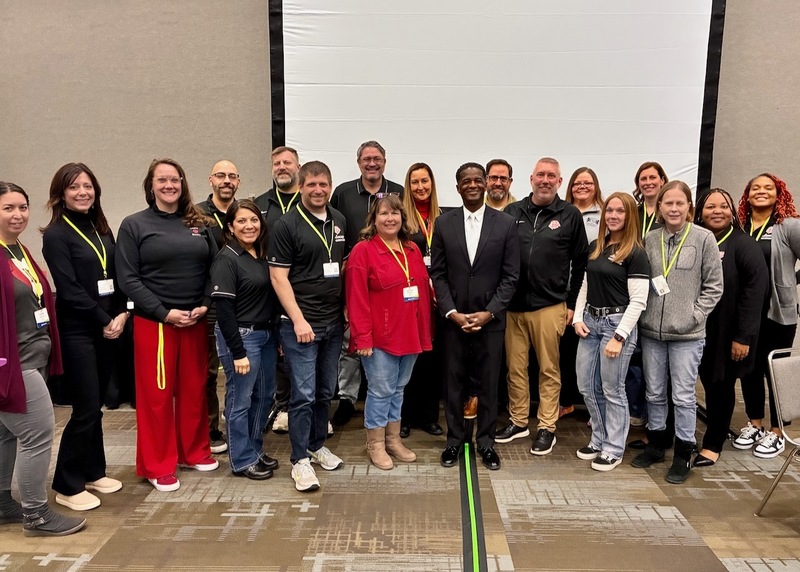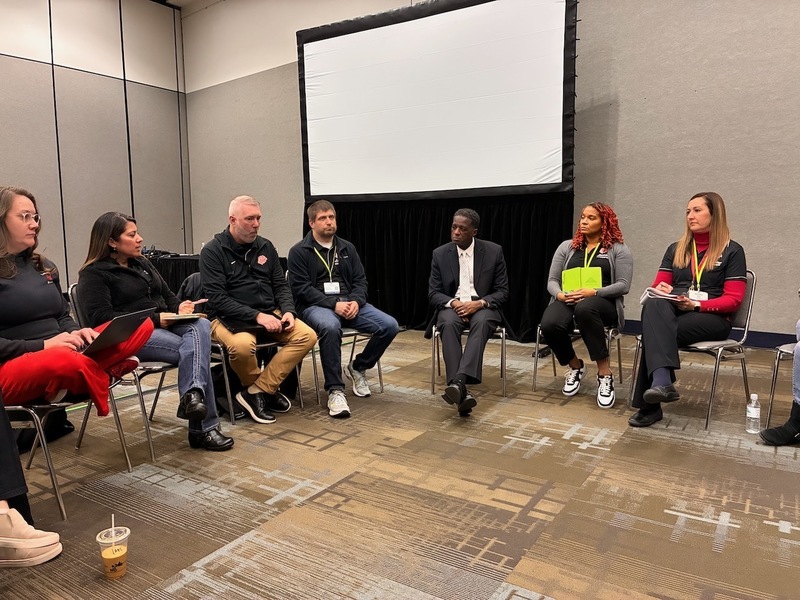

From December 1–3, members of the Lansing USD 469 District Leadership Team attended the PLC at Work Institute at the Kansas City Convention Center. This national conference brought together educators and school leaders from across the country to focus on one clear purpose: improving student learning through strong Professional Learning Communities (PLCs).
Over three days, our team participated in keynotes and breakout sessions led by nationally recognized PLC experts including Mike Mattos, Jason A. Andrews, Dr. Anthony Muhammad, and Dr. Luis Cruz. Sessions centered on strengthening collaborative teams, using data effectively, responding when students need additional time and support, and building healthy school culture that sustains improvement.
What is a PLC?
A Professional Learning Community is more than a meeting, a program, or a new educational “initiative.” A PLC is a way of working together that keeps learning at the center of everything we do. In a true PLC, educators collaborate regularly, using evidence of student learning to improve teaching and ensure every student is successful.
PLCs are built on three big ideas emphasized throughout the institute:
A relentless focus on student learning, not just teaching.
Collaboration- educators working as engaged teams, not in isolation.
Results orientation- using real learning evidence to guide next steps.
In PLCs, teams continually return to four critical questions:
What do we want students to learn?
How will we know if they learned it?
How will we respond when students don’t learn yet?
How will we extend learning for students who already know it?
Why PLCs Matter
Research and practice shared at the institute reinforced what we already know in Lansing USD469. When adults learn together and stay focused on the right work, students benefit. Schools that function as PLCs create consistent learning expectations, identify student needs earlier, and provide timely support.
Presenters also stressed that PLCs are strongest when paired with a healthy school culture, one that balances support for staff with clear expectations for growth. Dr. Muhammad described this as the leadership work required to move from “PLC Lite” (trying parts of the process) to “PLC Right” (fully committing to the work).
How Lansing USD 469 Uses PLCs
Lansing USD 469 has been committed to the PLC process because it helps us improve student achievement in a focused, consistent way. Across our schools, collaborative teams:
Unpack essential standards and clarify what students must learn.
Create common assessments to measure learning consistently.
Review results together to identify strengths and gaps.
Plan targeted instruction and interventions for students who need more time or different support.
Share strategies that are working so success spreads beyond one classroom.
This is not a one-time event. It is a continuous cycle of learning, reflecting, and improving, and it keeps our district aligned around what matters most: student success.
A Unique Opportunity with Dr. Anthony Muhammad
One highlight of the conference was a private team-time session Tuesday afternoon with Dr. Anthony Muhammad. During this dedicated time, our District Leadership Team met directly with Dr. Muhammad to ask questions specific to Lansing USD 469, including how to strengthen commitment to PLCs, how to navigate resistance to change, and how leadership teams can build cultures where collaboration and shared responsibility thrive.
Dr. Muhammad emphasized that real improvement happens when leaders:
Communicate clearly why change is needed,
Build trust through consistent follow-through,
Develop staff capacity to do the work well, and
Hold the system accountable once support is in place.
Our team left this session with practical next steps and a renewed sense of direction as we continue strengthening PLCs across the district.
Looking Ahead
Attending the PLC at Work Institute provided our District Leadership Team an opportunity to learn from national experts, collaborate as a district team, and bring home strategies that support our ongoing work. We are excited to continue refining our PLC practices so every school, every team, and every classroom is equipped to help students learn at high levels.
Thank you to our leadership team members for representing Lansing USD 469 and investing in work that directly supports students. We look forward to sharing new learning with staff and continuing to grow together.