
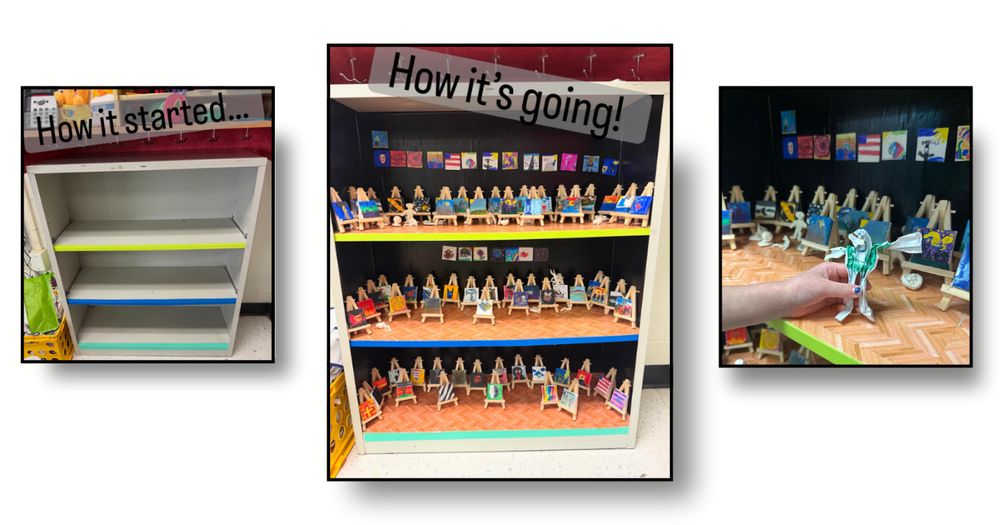
Students at Lansing Elementary had fun recently learning what makes an art museum different from other buildings. Art teacher Libby Stevenson introduced students to a hands-on learning experience called the “Tiny Art Museum,” an interactive project designed to help students better understand art museums and how artwork is displayed and experienced.
The project began with an old metal bookshelf that Mrs. Stevenson rescued from a closing doctor’s office nearly 15 years ago. After years of use, the shelf was ready for a refresh, and the perfect idea soon followed.
“With a little elbow grease and a lot of Mod Podge, the Tiny Art Museum was born,” Stevenson shared.
Once the museum structure was complete, students helped bring it to life. Second and third grade artists filled the shelves with miniature artwork, including paintings, drawings, and sculptures. Students then worked together to organize the artwork into categories and discuss how museums display art in ways that attract visitors and tell stories.
The museum quickly became packed with colorful creativity.
Kindergarten students from Mrs. Pierce’s class were especially excited to visit the tiny exhibit.
“I like the art and I like the colors,” shared Iris Kelley.
“I like the second and third graders’ hard work,” added Caroline Cote.
“I like all the colors and details,” said Dominic Williams.
To make the experience even more engaging, kindergarten and first grade students created miniature paper versions of themselves to “tour” the museum. Students used half-sheets of paper to design tiny paper people that resembled themselves, then photographed their paper visitors alongside their favorite pieces of artwork.
One featured paper person was created by Adley Faller from Mrs. Pierce’s class.
Mrs. Stevenson said the project exceeded expectations and has already inspired ideas for future expansions.
“Maybe we will have stairs? Maybe an ‘outdoor’ sculpture garden… The sky is the limit when kids are the creators,” she said.
Beyond the creativity and fun, the Tiny Art Museum also connected directly to Kansas Fine Arts Standards across multiple grade levels, helping students explore how museums function, how artwork is organized and displayed, and how art contributes to communities.
The project is another example of how Lansing students are encouraged to think creatively, collaborate with one another, and engage in hands-on learning experiences.