
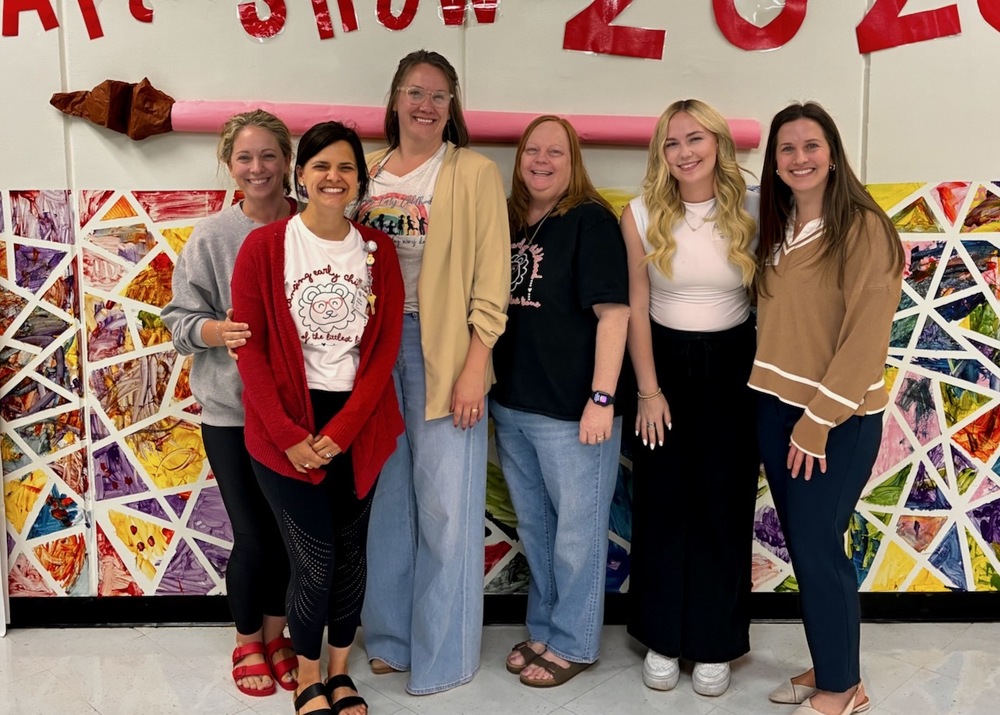
Researchers from the University of Kansas visited Lansing Early Childhood Center on Friday, May 8 to share results from an ongoing preschool communication intervention study focused on supporting young children with autism. Janet Weaver and Alexa Padak from KU’s Juniper Gardens Children’s Project presented data and video examples highlighting how intentional peer interactions and communication supports are helping students build meaningful social connections.
The project, known as Peer Interventions for Preschoolers with Autism (PIPA), is a multi-site study between the University of Kansas and the University of North Carolina. The research focuses on using the evidence-based “Stay-Play-Talk” intervention alongside speech-generating devices, such as iPads, to increase communication and social interaction among preschool students with autism and their peers.
This school year marked Lansing’s third year participating in the study. KU partnered with eight school districts and worked with 14 autistic preschoolers, 28 peer buddies, and 13 school service providers. Lansing Early Childhood Center Principal Dr. Becca Dalton, along with staff members Ashley Maiava, Keri Litewski, Tina Grigsby, and Jess Garner supported and implemented the project throughout the school year.
During the presentation, Weaver and Padak explained that students participate in structured play sessions twice a week, where peer buddies help encourage communication through play, turn-taking, and shared activities. Researchers then analyze communication growth over time through observations and video coding.
Early results from the KU and UNC sites have been encouraging. Researchers shared that autistic children increased their spontaneous communication from an average of 1.2 acts per minute during baseline observations to 1.7 acts per minute after just 10 intervention sessions. Peer communication also increased significantly, while reciprocal back-and-forth communication exchanges between children more than doubled.
The presentation also highlighted individual student growth at Lansing Early Childhood Center through charts and classroom video examples. Staff members described seeing increased confidence, stronger peer relationships, improved engagement during play, and more student-to-student interaction extending beyond the intervention sessions and into daily classroom activities.
One of the most meaningful outcomes discussed was the growth seen not only in participating students, but also in the peer buddies supporting them. Teachers shared that peers learned patience, encouragement, and how to initiate and maintain interactions with classmates who communicate differently.
Researchers emphasized that while the intervention is structured for the study, many of the communication strategies can be naturally incorporated into classrooms and everyday interactions with all students. Lansing staff members noted that the techniques learned through the project are already influencing classroom practices and peer interactions beyond the formal study sessions.
The KU team also recognized Lansing staff member Ashley Maiava for helping launch and sustain the program locally. During the presentation, researchers shared that Maiava played an important role in connecting families to the project, helping maintain communication throughout the year, and advocating for student participation. Weaver noted that family connection can sometimes be one of the biggest barriers in research participation and credited Maiava’s persistence and support in helping the project grow successfully at Lansing Early Childhood Center.
“We’re so honored to participate in this program and see the benefits for our students, staff, and families,” Maiava said. “Our Early Childhood program has grown through the opportunity to provide evidence-based intervention while receiving ongoing training and support to help facilitate communication, connection, and friendships for our Littlest Lions.”
KU researchers plan to continue the project next school year, marking Lansing’s fourth year participating in the study. Families of participating students will also receive individual meetings and progress updates, including videos and data showing their child’s communication growth over time.
The collaboration continues to provide Lansing Early Childhood Center staff with opportunities to support innovative practices that strengthen communication, inclusion, and meaningful peer relationships for young learners.