
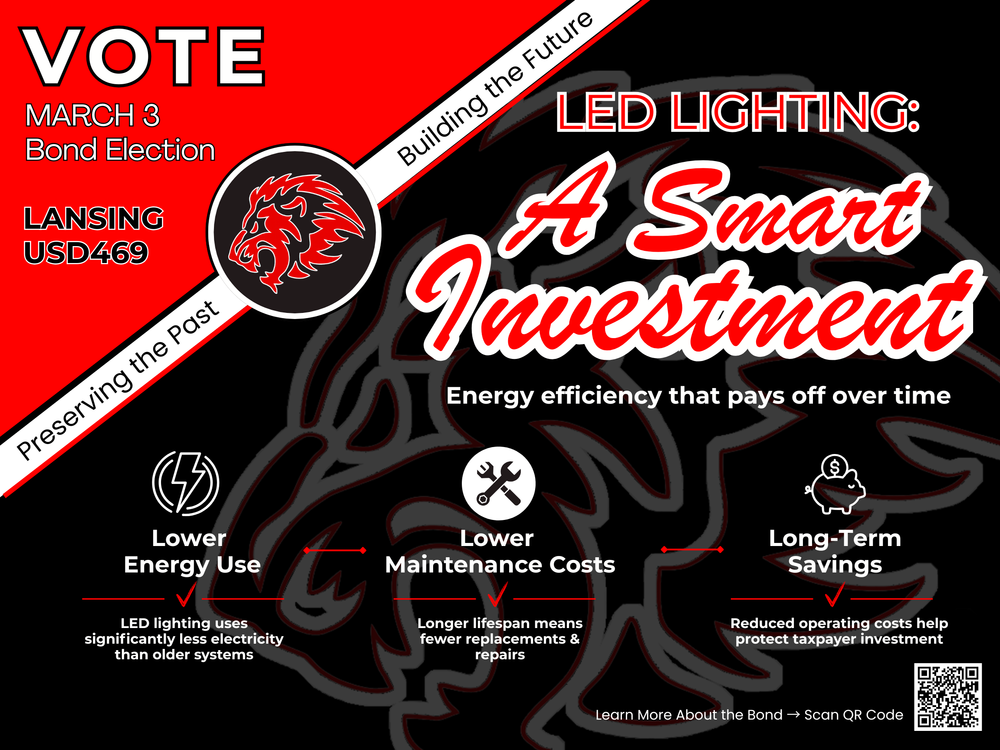
One of the ways the proposed bond helps protect taxpayer investment is through energy-efficient upgrades that reduce long-term operating costs. One example is the district’s planned transition to LED lighting across facilities.
Why LED Lighting Matters
Many Lansing USD 469 buildings still rely on older lighting systems that are less efficient, require frequent maintenance, and consume more electricity. LED lighting offers a modern alternative that provides both financial and operational benefits.
What LED Lighting Upgrades Provide
Switching to LED lighting helps the district:
Reduce energy use compared to traditional lighting
Lower utility costs year after year
Decrease maintenance needs due to longer fixture life
Improve lighting quality for classrooms, hallways, and common spaces
Increase reliability, reducing disruptions caused by lighting failures
LED fixtures typically last significantly longer than older lighting systems, which means fewer bulb replacements and less staff time spent on repairs.
Long-Term Cost Savings
While LED upgrades require an upfront investment, they are widely recognized as a cost-saving measure over time. Reduced energy consumption and maintenance costs help offset initial expenses and create ongoing operational savings.
These savings support:
More predictable budgeting
Reduced emergency repairs
Better use of district resources
How This Fits into the Bond Plan
The proposed bond allows the district to:
Complete LED lighting upgrades efficiently at scale
Coordinate lighting improvements with other system upgrades
Pair modernized facilities with a preventative maintenance plan
LED lighting is one example of how the bond is designed not only to address current needs, but also to reduce future costs and improve operational efficiency.
Learn More
Early Voting In Person - Lansing Fire Station: February 28, 8 AM - 12 PM
General Election: March 3