
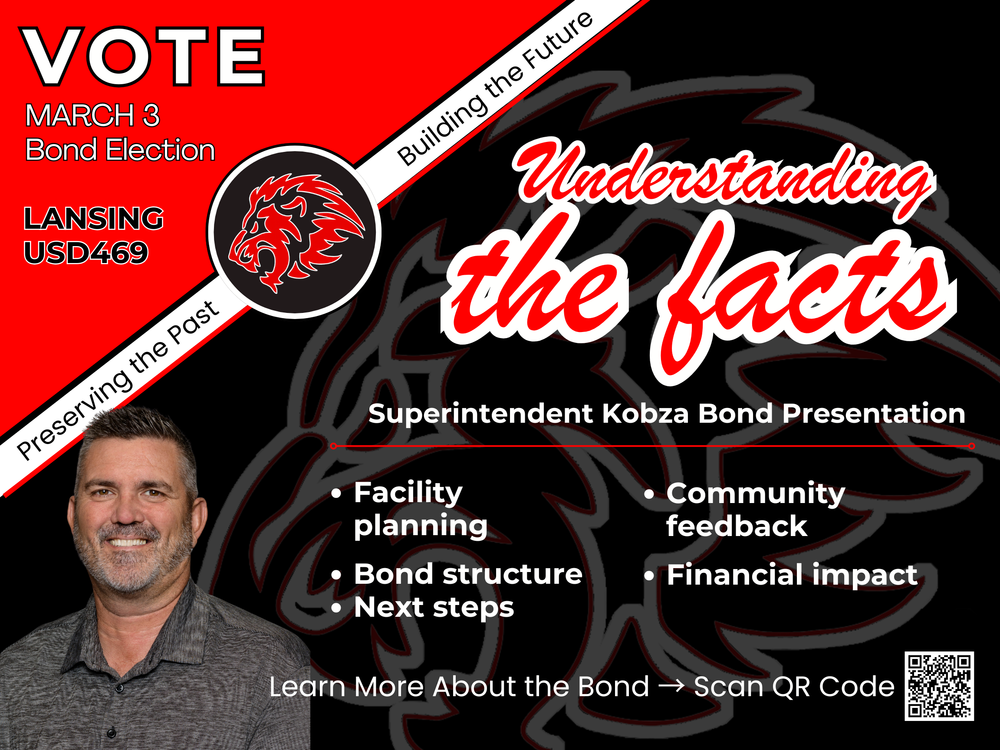
Lansing USD 469 is committed to sharing clear, factual information about the proposed bond election scheduled for March 3.
To support transparency and accessibility, the district has made a recorded version of Superintendent Marty Kobza’s bond presentation available on the district website. This presentation is the same information being shared with staff, site councils, and community groups across Lansing.
The video is intended to help community members better understand:
Why the district is proposing a bond now
How facility needs were identified
How community feedback shaped the proposal
What is included in the bond and how it is structured
The potential financial impact and long-term planning considerations
The presentation is informational only and is designed to provide residents with the facts needed to make an informed decision.
What’s Covered in the Presentation
In the video, Superintendent Kobza walks through:
Facility Planning & Assessments
Independent facility studies, architectural evaluations, and financial modeling were used to identify priorities and risks across district buildings.Community Feedback
Results from a randomized community phone survey directly influenced the scope, structure, and financial approach of the proposed bond, including the decision to separate projects into two ballot questions.Why Maintenance Is the Core Focus
Aging roofs, HVAC systems, electrical infrastructure, parking lots, and safety systems have reached the point where replacement is needed to avoid escalating emergency repairs and costs.Long-Term Maintenance Planning
The district has implemented preventative maintenance systems and replacement cycles to ensure investments made through the bond are protected moving forward.Financial Overview & Tax Impact
Independent financial analysis prepared by Raymond James Public Finance explains mill levies, projected costs, and scenarios for homeowners.If only Question 1 passes, the mill levy would remain flat.
If both questions pass, the estimated impact on a $400,000 home would be approximately $2.86 per month.
Cost Savings & Risk Reduction
Modernized systems can reduce emergency repairs, lower energy usage, and significantly reduce insurance premiums and liability exposure.Career & Technical Education (CTE)
The bond supports updated instructional spaces to expand career pathways aligned with student interest and workforce needs.Early Childhood Improvements & Inclusive Playgrounds
Targeted upgrades to the Early Childhood Center focus on safety, building systems, and accessibility. Playground improvements include inclusive equipment and safer surfacing for all students.Bond Structure
The proposal includes two questions:Question 1: Core facility needs (maintenance, safety, early childhood, CTE, playgrounds, middle school track, tennis courts)
Question 2: Activity enhancements, including turf for multiple activity areas
Question 2 is contingent upon Question 1 passing.
What Happens If the Bond Does Not Pass
Projects would be delayed, costs would continue to rise, and alternative financing options would address only a portion of the district’s needs while placing pressure on annual operating funds.
Submit questions or request a presentation
Community members are encouraged to submit questions or request an informational presentation using the form linked below. Submitted questions help guide future updates, FAQs, and informational materials.
Early Voting In Person - Lansing Fire Station: February 28, 8 AM - 12 PM
General Election: March 3