
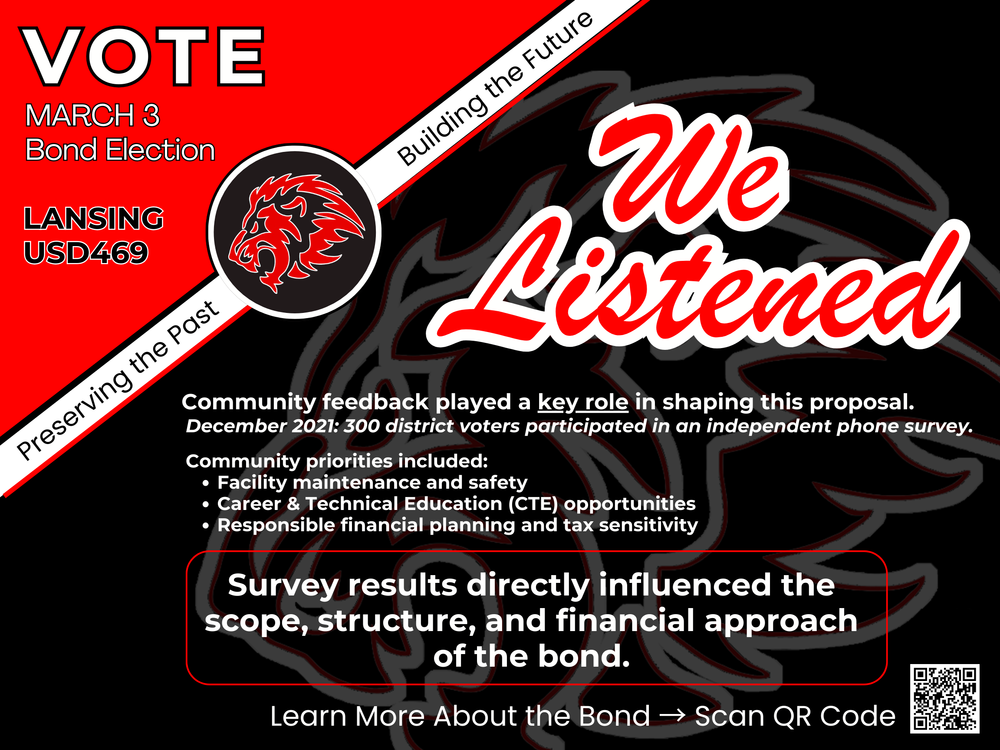
Community input has played a critical role in shaping Lansing USD 469’s proposed bond initiative. Before bringing any proposal forward, the district sought to better understand community priorities, concerns, and expectations related to school facilities and potential tax impact.
In December 2024, Lansing USD 469 conducted a scientific phone survey of 300 registered voters living within district boundaries. The survey was designed to reflect all geographic areas of the district and included a margin of error of ±5.6%. The results provided important insight into how the community views district facilities and what types of improvements residents felt were most important.
What the Community Told Us
Survey responses showed clear themes that helped guide district planning:
Strong support for maintaining existing facilities and addressing safety, security, and building systems
High value placed on Career & Technical Education (CTE) and learning spaces that prepare students for future careers
Support for early childhood investments that focus on safety and functionality
Greater approval for bond options that minimize tax impact or avoid mill levy increases when possible
These responses helped the district understand not only what improvements were important, but also how the community preferred those improvements to be structured.
View the 2024 Community Phone Survey Executive Summary
How Feedback Influenced the Bond Proposal
The proposed bond reflects community feedback in several key ways:
Scope: The bond focuses on maintaining and improving existing facilities rather than building new schools or adding large amounts of new space.
Structure: The proposal includes two ballot questions, allowing voters to consider major facility needs separately from athletic field enhancements.
Financial Approach: The base bond package is structured to maintain the current mill levy, aligning with community preference for low-impact or no mill levy increase scenarios.
Priorities: Projects emphasize safety, building systems, long-term maintenance, and instructional spaces rather than cosmetic upgrades.
Listening and Responding
Community feedback did not determine individual projects on its own, but it played a significant role in shaping what was included, what was separated, and how the bond was structured. Facility assessments, professional evaluations, and Board direction were all considered alongside survey results to develop a proposal that reflects both district needs and community expectations.
Continuing the Conversation
The district remains committed to transparency and ongoing communication. Additional information, including survey results, financial analyses, project lists, and frequently asked questions, is available on the district website.
Early Voting In Person - Lansing Fire Station: February 28, 8 AM - 12 PM
General Election: March 3